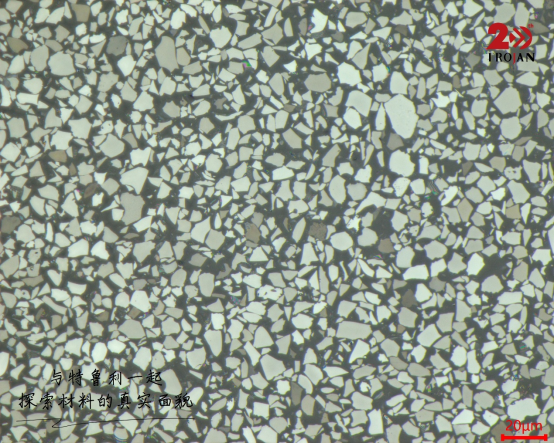
Silicon–carbon composites are promising anode materials for next-generation lithium-ion batteries. However, their porous structure and the coexistence of soft and hard phases make metallographic preparation challenging.
Particle pull-out, pore-related artifacts, surface deformation, and edge damage can compromise microstructural evaluation. A carefully controlled preparation process is essential to preserve the material’s original features.
Voie de préparation :
- Grinding: P800 → P4000
- Rough Polishing: SC-JP + 1 μm PD-WT
- Final Polishing: ZN-ZP + 50 nm SO-A439
Low-shrinkage cold mounting with vacuum impregnation can help support porous structures, while fine, controlled polishing helps minimize particle damage and preparation-induced artifacts.
For demanding cross-section analysis, additional ion polishing may be considered to reduce mechanical damage before advanced characterization.
The goal is not simply to achieve a smooth surface, but to preserve the true structure of silicon particles, porous carbon, and the outer carbon coating for reliable microstructural analysis.
#BatteryMaterials #SiliconCarbonAnode #Metallography #SamplePreparation #LithiumIonBatteries #MaterialAnalysis #TROJAN