
Have you ever finished grinding, polishing, and etching a specimen, only to find unexplained stains or discoloration the next day?
This problem can be particularly frustrating when preparing coated, plated, or surface-treated components, such as chrome-plated gears, nickel-plated parts, thermal spray coatings, and carburized or nitrided layers. Regrinding and repolishing may not solve the problem because the cause may lie not in the polishing process, but at the interface between the mounting resin and the specimen.
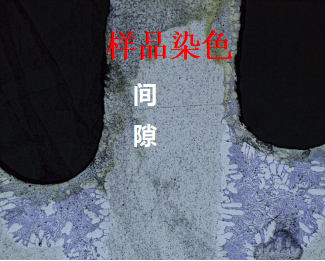
How Can a Shrinkage Gap Cause Staining?
Mounting resins undergo volumetric shrinkage during curing or cooling. Depending on the resin system and process conditions, this shrinkage may create a microscopic gap between the resin and the specimen.
Although this gap may be invisible to the naked eye, it can provide a pathway for liquids used during sample preparation, including cooling fluids, polishing suspensions, and etchants.
Liquid trapped in the gap may gradually seep out after preparation, cleaning, or drying, leaving persistent stains or discoloration on the specimen surface. This can make an otherwise well-prepared sample appear defective, even after repeated polishing.
The resin–sample interface is therefore an important factor to consider when investigating unexplained post-preparation staining.
Why Are Coated and Surface-Treated Samples Particularly Sensitive?
For plated, coated, and case-hardened specimens, maintaining the integrity of the specimen edge is essential.
If the mounting resin does not bond adequately to the specimen, gaps may form along the interface. Liquids can penetrate these gaps and come into contact with the coating or substrate, potentially contributing to staining or interfacial attack.
Poor interfacial support can also allow the resin to separate from the specimen during grinding and polishing. This may increase the risk of edge rounding, coating pull-out, or apparent delamination, compromising coating-thickness measurements and microstructural interpretation.
For these applications, low shrinkage, strong adhesion, and reliable edge retention are important criteria when selecting a mounting resin.
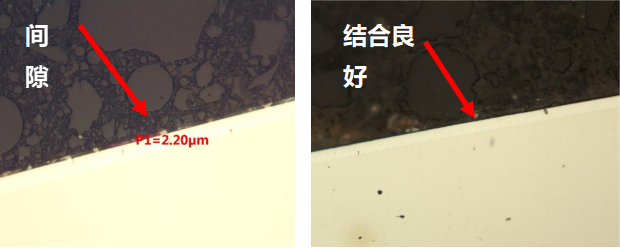
Edge-Retention Mounting Resins: Supporting the Specimen–Resin Interface
TROJAN offers mounting resin solutions designed for applications where edge retention and interfacial integrity are critical.
The objective is to achieve close contact between the resin and the specimen, minimize interfacial gaps, and provide sufficient support during subsequent grinding and polishing.
Hot Mounting: EP 2237 Edge-Retention Resin
TROJAN EP 2237 is a high-quality epoxy hot mounting resin designed to provide high hardness, strong edge retention, good adhesion to the specimen surface, and good grinding and polishing performance.
It is suitable for hard materials such as hardened gears, cemented carbides, and ceramics, as well as plated, coated, and case-hardened specimens that require reliable edge support.
Cold Mounting: TJ-2568 High-Penetration Epoxy Resin
TROJAN TJ-2568 is a slow-curing epoxy resin with a curing time of approximately 45–90 minutes. Its low shrinkage, good adhesion, and edge-retention properties make it suitable for porous or cracked specimens and samples requiring careful edge preservation.
When used with appropriate pressure-assisted mounting equipment, it can help reduce trapped air and improve the quality of the mounted specimen.
Additional Cold Mounting Options
Other options include:
- TJ-2228 Slow-Curing Epoxy Resin— suitable for inorganic materials where low shrinkage and edge retention are important.
- TJ-2226 Epoxy Resin— another option for cold mounting, depending on specimen requirements and the desired mounting characteristics.
The most suitable resin depends on the specimen material, coating or layer structure, sensitivity to heat, and the requirements of the subsequent preparation process.
- Practical Considerations for Better Edge Retention
When investigating staining or edge defects, consider the entire mounting and preparation process:
- Inspect the resin–sample interface.Look for gaps, separation, or areas where liquid may have penetrated.
- Select a resin with suitable shrinkage and adhesion characteristics.Consider the specimen material and the need for edge retention.
- Use the appropriate mounting method.Vacuum or pressure-assisted mounting may help with porous specimens or applications where trapped air is a concern.
- Check the complete preparation process.Cleaning, drying, resin selection, and grinding and polishing conditions can all influence the final result.
Persistent staining can have multiple causes, so the resin–sample interface should be investigated alongside other possible sources of contamination or surface discoloration.
Conclusion
A clean-looking surface does not always mean the specimen has been prepared correctly. For coated, plated, and surface-treated materials, the integrity of the resin–sample interface can affect edge retention, surface cleanliness, and the reliability of subsequent metallographic evaluation.
By selecting a mounting resin suited to the specimen and application, laboratories can reduce the risk of preparation-related artifacts and improve the consistency of coating-thickness measurements and microstructural analysis.
Reliable metallography starts with the details — including the interface you may not be able to see.
#Metallography #SamplePreparation #EdgeRetention #ColdMounting #HotMounting #CoatingAnalysis #FailureAnalysis #TROJAN