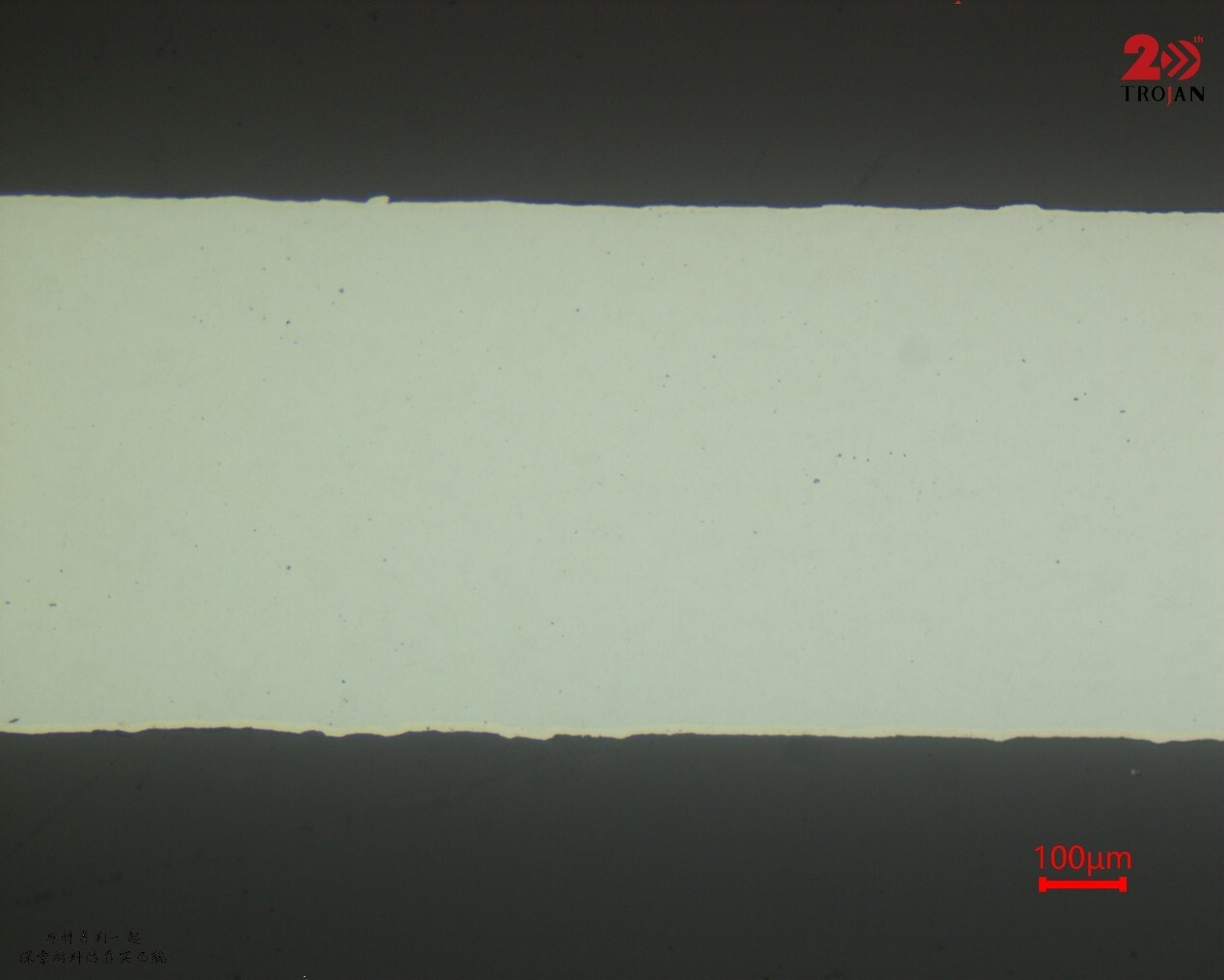
Trincas, delaminação ou fratura frágil durante a estampagem e dobra do aço laminado a frio SPCC nem sempre podem ser explicadas apenas pelas dimensões ou pelas propriedades convencionais de tração.
A metalografia de seção transversal pode revelar aspectos que a inspeção rotineira pode não detectar — como grãos grosseiros, banding excessivo, aglomeração de carbonetos ou microtrincas induzidas pelo laminação, que podem reduzir a conformabilidade e contribuir para falhas inesperadas.
Para esta amostra de SPCC, utilizamos o seguinte procedimento de preparação:
• Resina para montagem a frio TJ2226
• Papel abrasivo MET-SP SiC P400 com água
• Disco de retificação fino POS + suspensão de diamante policristalino PD-WT 9 μm
• Lenço de polimento de seda branca SC-JP + suspensão de diamante policristalino PD-WT 3 μm
• Lenço de polimento de poliuretano preto ZN-ZP + suspensão de polimento SO-A539 0,05 μm
A retificação e o polimento foram realizados utilizando a retificadora e polidora automática Alpha-610.
Uma seção transversal bem preparada oferece uma base muito mais clara para avaliar a microestrutura, rastrear falhas de conformação e verificar a qualidade do processo.
#Metalografia #SPCC #AnáliseDeFalhas #ControleDeQualidade #PreparaçãoDeAmostras #Aço