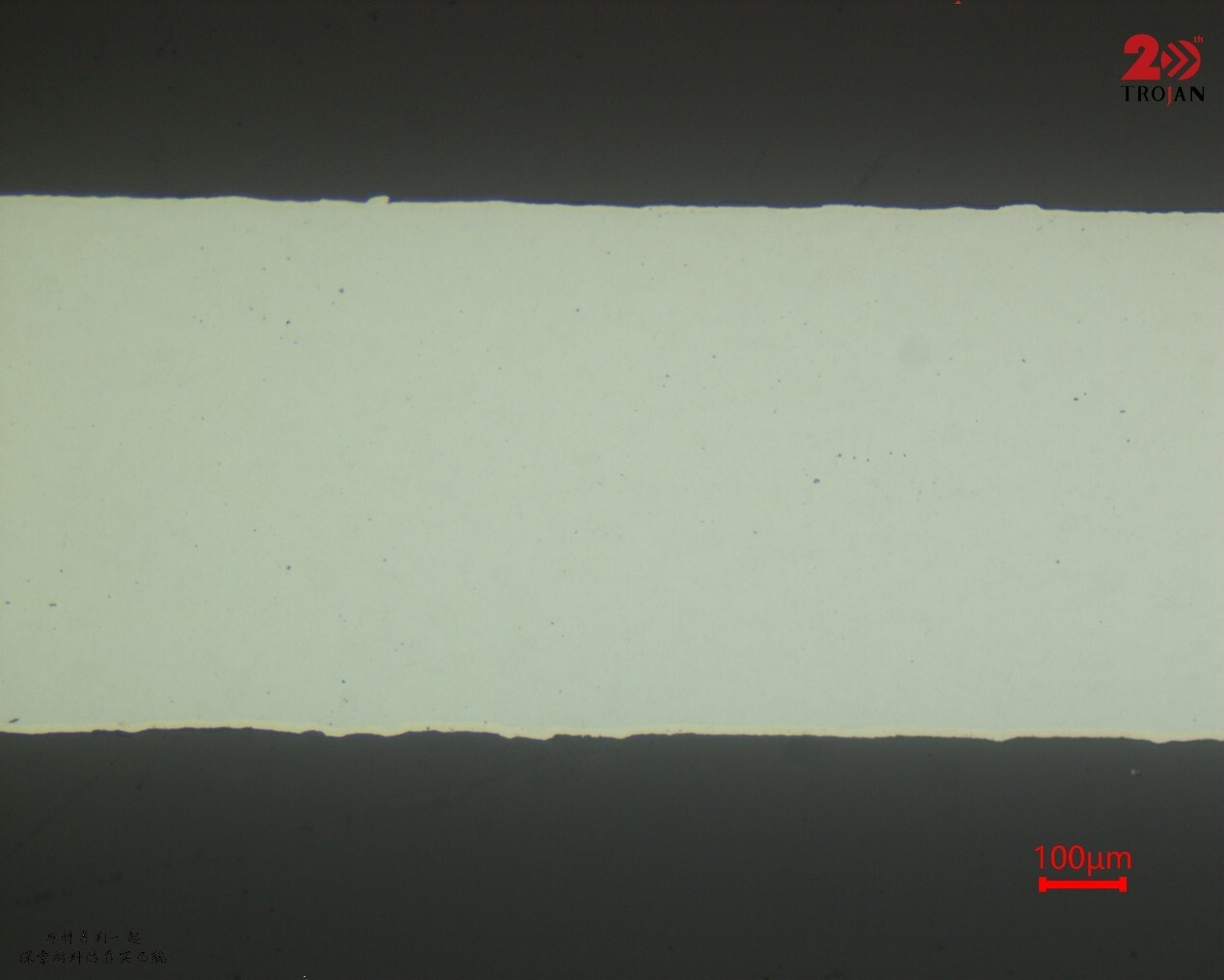
Risse, Delamination oder spröder Bruch beim Stanzen und Biegen von SPCC kaltgewalztem Stahl lassen sich nicht immer durch Abmessungen oder herkömmliche Zugfestigkeitseigenschaften erklären.
Die Querschnittsmikrographie kann aufzeigen, was bei einer routinemäßigen Inspektion möglicherweise übersehen wird – etwa grobkörnige Strukturen, übermäßige Bandbildung, Karbidaggregation oder walzbedingte Mikrorisse, die die Umformbarkeit verringern und zu unerwarteten Ausfällen führen können.
Für diese SPCC-Probe verwendeten wir folgenden Präparationsablauf:
• TJ2226 Kaltmontageharz
• P400 MET-SP SiC-Schleifpapier mit Wasser
• POS Feinschleifscheibe + 9 μm PD-WT polykristalline Diamantsuspension
• SC-JP weiße Seidenpoliertuch + 3 μm PD-WT polykristalline Diamantsuspension
• ZN-ZP schwarzes Polyurethan-Poliertuch + 0,05 μm SO-A539 Poliersuspension
Schleifen und Polieren wurden mit der automatischen Schleif- und Poliermaschine Alpha-610 durchgeführt.
Ein gut präparierter Querschnitt bietet eine deutlich klarere Grundlage zur Bewertung der Mikrostruktur, zur Analyse von Umformfehlern sowie zur Überprüfung der Prozessqualität.
#Mikrographie #SPCC #Ausfallanalyse #Qualitätskontrolle #Probenvorbereitung #Stahl